Microdosing, Psychedelics
Is Microdosing Real or Just Placebo? The Science Behind the Trend
Is Microdosing Real or Just Placebo? The Science Behind the Trend
Over the past decade, microdosing psychedelics has become one of the most widely discussed trends in conversations about productivity, creativity, and mental well-being. From Silicon Valley entrepreneurs to artists and wellness enthusiasts, many people claim that taking very small doses of psychedelic substances can enhance focus, mood, and problem-solving abilities.
At the same time, scientists and skeptics question whether these reported benefits are truly caused by the substances themselves—or whether they might simply be the result of the placebo effect.
This raises an important and controversial question: Is microdosing actually real, or is it mostly placebo?
To understand the debate, it’s important to explore what microdosing is, why people do it, what research currently shows, and why the scientific community remains divided.
What Is Microdosing?
Microdosing generally refers to taking extremely small amounts of a psychedelic substance—typically far below the amount required to produce noticeable psychedelic effects.
Instead of causing strong changes in perception or consciousness, these tiny doses are intended to produce subtle psychological shifts without disrupting daily functioning.
People who experiment with microdosing often follow schedules such as taking a small dose every few days rather than daily.
Advocates of microdosing commonly report benefits such as:
- Improved mood
- Increased creativity
- Greater mental clarity
- Better focus and productivity
- Reduced anxiety or stress
- Enhanced emotional balance
However, these reported effects are largely based on personal anecdotes rather than large-scale scientific evidence.
How Microdosing Became Popular
The concept of microdosing gained widespread attention during the 2010s, particularly through online communities, blogs, and podcasts discussing personal development and cognitive enhancement.
Many professionals in creative or high-performance fields became curious about whether microdosing might help them think differently, solve problems more effectively, or maintain motivation during demanding work schedules.
At the same time, growing public interest in psychedelic research helped normalize conversations about these substances.
Media coverage of psychedelic studies exploring mental health treatments also contributed to curiosity about whether smaller doses might produce everyday benefits without intense psychedelic experiences.
As a result, microdosing quickly evolved from a niche idea into a global cultural trend.
What Scientists Say About Microdosing
Researchers have become increasingly interested in studying microdosing, but the science is still developing.
One of the biggest challenges in studying microdosing is that the effects people report are often subtle and difficult to measure objectively.
In traditional psychedelic research, large doses produce noticeable changes in perception and brain activity. Microdoses, on the other hand, may produce effects that are small enough to be influenced by expectations or psychological factors.
Despite these challenges, several studies have begun exploring the topic.
Some observational studies have found that individuals who report microdosing also report improvements in mood, creativity, and emotional well-being. However, these studies rely heavily on self-reported data, which can be influenced by personal beliefs and expectations.
This is where the placebo debate becomes particularly important.
Understanding the Placebo Effect
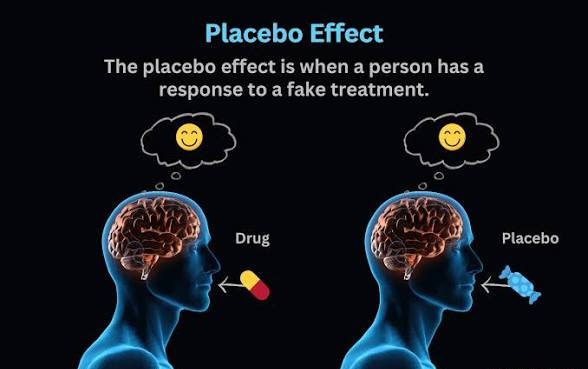
The placebo effect occurs when people experience real changes in their symptoms or performance simply because they believe they are receiving an effective treatment.
In medical research, placebo effects can be surprisingly powerful. In some cases, patients report improvements even when they receive inactive substances.
Psychologists believe this happens because expectation can influence perception, mood, and cognitive performance.
When people expect a positive outcome, their brains may respond in ways that reinforce that expectation.
Because microdosing often involves subtle effects, critics argue that many reported benefits may actually be placebo-driven.
Experiments Testing the Microdosing Placebo Theory
To explore whether microdosing effects are real or placebo-based, researchers have begun designing experiments where participants do not know whether they are receiving a microdose or a placebo.
In some studies, participants who believed they had taken a microdose reported improvements in mood or creativity—even when they had actually taken a placebo.
This suggests that expectation may play a significant role in perceived benefits.
However, the results are not entirely clear-cut. Some studies have suggested that microdosing may produce small but measurable changes in mood or cognitive flexibility.
Because findings vary, scientists continue to debate how much of the microdosing experience is psychological and how much may be pharmacological.
Why People Still Believe Microdosing Works
Even with ongoing scientific uncertainty, many people remain convinced that microdosing provides real benefits.
There are several possible explanations for this.
Personal Experience
People tend to trust their own experiences more than abstract scientific debates. If someone feels more focused, motivated, or creative after microdosing, they may view the practice as effective regardless of research findings.
Lifestyle Changes
Some individuals who experiment with microdosing also adopt other lifestyle changes, such as improved sleep habits, meditation, journaling, or exercise.
These changes can significantly influence mood and productivity, making it difficult to isolate the effects of microdosing itself.
Increased Self-Awareness
The act of intentionally tracking mood, creativity, or productivity can increase self-awareness. This heightened attention may lead individuals to notice improvements that might otherwise go unnoticed.
The Role of Expectation and Mindset
Psychologists often emphasize that mindset plays a powerful role in human experience.
If someone believes a particular routine will enhance their performance or well-being, that belief alone can influence behavior and perception.
This does not necessarily mean the experience is “fake.” Placebo effects are real psychological phenomena that can produce measurable changes in mood and perception.
The challenge for researchers is determining whether microdosing produces effects beyond those psychological influences.
Why Microdosing Research Is Difficult
Studying microdosing presents unique challenges for scientists.
First, psychedelic substances are heavily regulated in many countries, making large-scale research difficult to conduct.
Second, the effects of microdosing may vary widely depending on individual biology, expectations, environment, and psychological state.
Finally, many people who microdose are already interested in personal development, creativity, or mindfulness. This means their mindset may influence how they interpret subtle changes in mood or cognition.
These variables make it difficult to isolate clear cause-and-effect relationships.
The Future of Microdosing Research
As interest in psychedelics continues to grow, researchers are developing new methods to study microdosing more carefully.
Future studies may use larger participant groups, improved placebo controls, and advanced brain imaging techniques to better understand how microdoses influence brain activity.
Scientists are also exploring whether microdosing might affect cognitive flexibility, emotional processing, or creativity in measurable ways.
Until more data becomes available, however, many experts recommend approaching the topic with cautious curiosity rather than strong conclusions.
Is Microdosing Mostly Placebo?
The honest answer is that researchers do not yet fully know.
Some studies suggest that placebo effects may explain a significant portion of the benefits people report. Other studies hint that small pharmacological effects could also play a role.
It is also possible that both explanations are true at the same time.
Human psychology is complex, and experiences often result from a combination of biological effects, expectations, environment, and personal interpretation.
Final Thoughts
The question of whether microdosing is real or simply placebo reflects a broader challenge in understanding human consciousness and perception.
While personal stories about microdosing are widespread, scientific research is still working to determine how much of these effects are driven by chemistry and how much by psychology.
For now, microdosing remains one of the most intriguing topics in the evolving conversation about psychedelics, brain science, and human potential.
As researchers continue exploring the mysteries of the mind, future discoveries may provide clearer answers about whether microdosing truly changes the brain—or whether the power of belief plays a larger role than we realize.